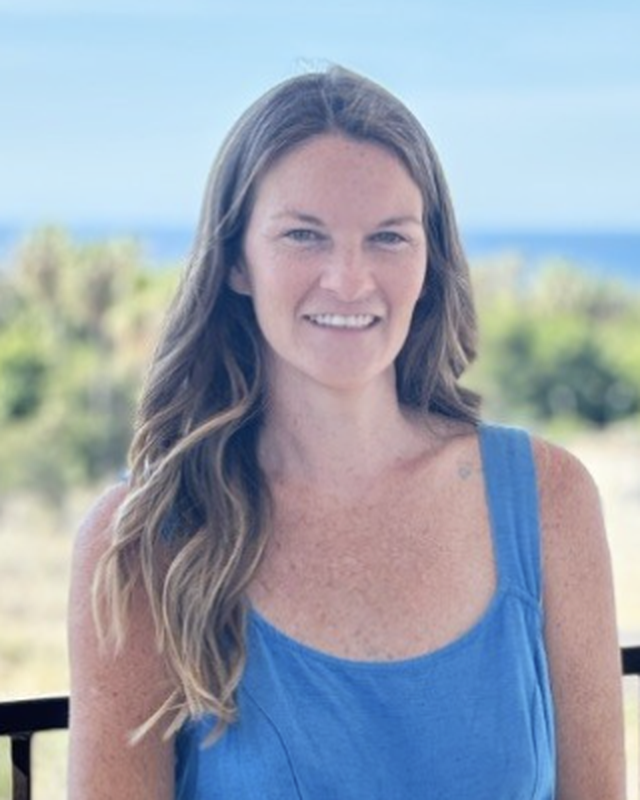
Postpartum women are already taking psilocybin, mostly outside any clinic, trial, or physician’s care, and the researchers who study the drug have almost no direct data on what it does to a body six weeks past childbirth, an infant at the breast, or the bond between the two of them. That gap is the subject of Amanda Wilde’s work. Wilde is the Harvard-trained researcher behind MINDS, a framework arguing that postpartum women’s exclusion from psychedelic research has outlived its scientific justification, and in a series of written exchanges with Behavioral Wire, she has laid out, in more detail than she has offered publicly before, what a first study would need to look like, what would make her abandon it, and how she weighs the strongest evidence against her own position.
That evidence arrived in the middle of this reporting process. A September 2025 paper in Nature Communications, from a University of California, Davis lab run by David Olson and Danielle Stolzenberg, found that a single dose of psilocybin left postpartum mice more anxious two weeks later, while the same dose made non-postpartum mice comparatively calmer. Their nursing pups, exposed to psilocin through breast milk, grew into adults who found less pleasure in sugar water, a standard rodent measure of anhedonia. Asked directly whether that finding changes her view, Wilde’s answer is not a retreat. “I am not prepared to give more weight to a small group of mice in a Sacramento laboratory than to the real, lived experiences of the many mothers already using psilocybin,” she wrote, “including my own.”
The case Wilde is making
Wilde’s position is narrower than “psilocybin works for postpartum depression,” and narrower than the mouse study’s authors would need her to abandon to prove their point wrong. Her claim is that the threshold for beginning research sits lower than the threshold for recommending treatment, and that total exclusion of postpartum women from psychedelic trials, given three converging facts, is no longer defensible: controlled clinical evidence of benefit in trauma-adjacent and depressive conditions in other populations, a documented history of ceremonial mushroom use in Indigenous healing traditions, and use by postpartum women themselves, already happening outside any research setting.
For the third of those, Wilde points to a survey called Mothers of the Mushroom: 408 of 411 respondents described psilocybin use after giving birth, and 237 reported using it while breastfeeding, commonly citing relief from anxiety and a stronger sense of connection to their children. The numbers check out against the survey’s own published totals. What they are not is a scientific dataset in the ordinary sense. Mothers of the Mushroom is a self-selected online questionnaire run by a citizen-science project founded by an educator who identifies as Mikaela de la Myco, not an academic researcher; it has not been peer-reviewed, has not gone through an institutional review board, and has not, by its own account, yet been submitted to a scientific journal. Wilde does not overstate it. “These are self-reports, not controlled outcomes,” she wrote, “and they cannot establish safety, efficacy, causation, or infant risk.” Her argument is that they do not need to, to justify starting a study. They only need to show that a population is already exposed to a drug researchers have declined to study in them directly.
She is just as precise about what does not move her. The strongest argument against beginning the research now, she says, is that the postpartum period could be a uniquely sensitive biological and psychological window, one in which the same neuroplasticity that might make psilocybin therapeutic could equally make it destabilizing. Her counter is a comparison, not a dismissal: psychedelic researchers already study people with PTSD, a population with its own trauma-adapted, dysregulated nervous systems, without treating that complexity as disqualifying. “The field has not concluded that this complexity makes research impossible,” she wrote, “rather, it has moved towards this complexity in other populations.”
What a first study would look like
Asked to design that study, Wilde described something closer to a careful pilot than a registration trial. Each participant would serve as her own baseline: mothers six weeks to a year postpartum, given a single dose of whole psilocybin mushrooms, not a synthetic formulation, in a supervised clinical setting. Before dosing, participants would complete validated psychometric measures alongside a narrative interview, because, in Wilde’s words, “postpartum suffering is not always captured adequately by symptom scales alone.” She would want the study team to include people with cultural and relational expertise in holding altered states, “potentially including an Indigenous medicine woman or healer, where that involvement is invited, appropriate, compensated, and genuinely integrated rather than used symbolically.” An integration interview would follow within a week, then structured check-ins at two weeks, six weeks, three months, six months, and twelve months, tracking maternal confidence, depression and anxiety, emotional regulation, the mother’s subjective sense of connection to her infant, and, as a co-equal outcome, whether anyone gets worse.
Deliberately absent from that design is any attempt to fix the structural conditions of postpartum life: sleep deprivation, financial strain, childcare, partner support. Wilde treats those as context to be recorded, not problems the study is meant to solve. “They are not problems that psilocybin can reasonably be expected to directly resolve,” she wrote, “particularly in a first study.”
The breastfeeding problem, and a math error inside it
No part of Wilde’s proposal drew more caution than lactation, and no part of the underlying evidence is thinner. There is no monograph on psilocybin in the NIH’s LactMed database, and MotherToBaby, the federally supported fact sheet service for pregnant and breastfeeding patients, states plainly that “magic mushrooms have not been studied for use during breastfeeding” and that “it is not known if or how magic mushrooms could affect a nursing child.” On that much, Wilde and the independent record agree completely.
Where her account runs into trouble is the arithmetic she uses to estimate how quickly the drug clears. Psilocin, the active metabolite of psilocybin, reaches peak plasma concentration roughly 105 minutes after an oral dose and has an elimination half-life close to three hours, both figures drawn from published pharmacokinetic studies. Wilde cited the conventional rule that five to seven half-lives represent near-complete systemic elimination, then used it to estimate that very little psilocin remains in a mother’s circulation by 24 to 48 hours after a single dose, adding, correctly, that this “is not a measured breast-milk clearance time.” The trouble is that five to seven half-lives at a three-hour half-life comes to 15 to 21 hours, not 24 to 48. Her endpoint figure, that approximately 0.0016 percent of the dose remains after 48 hours, is arithmetically sound on its own terms, but it corresponds to roughly sixteen half-lives, not the five to seven she names. The underlying intuition, that little parent compound should remain by two days out, survives the correction. The specific math attached to it does not, and a study built on this reasoning would need to fix it before an eligibility window or a feeding-interruption plan gets built around it.
What no calculation can substitute for, and what Wilde does not claim it can, is direct measurement. Her proposed lactation substudy would track psilocybin and psilocin concentrations in maternal plasma and breast milk after a known oral dose, the timing and size of peak milk concentrations, the milk-to-plasma ratio, the estimated and relative infant dose, and developmentally appropriate follow-up in infants whose mothers resume feeding under the protocol. Until a study like that exists, she argues, the honest position is disclosure, not reassurance: tell breastfeeding mothers what is and is not known, with the option of a feeding-interruption and milk-expression plan in the meantime.
Where the mice complicate her case
The Nature Communications paper is the most specific, most direct piece of evidence working against Wilde’s argument, and it deserves to be read on its own terms, not through either side’s framing of it. Researchers put postpartum mice through several days of chronic stress, an unfamiliar male repeatedly introduced to the cage, nesting material removed, then gave them a single 2-milligram-per-kilogram dose of psilocybin, delivered by injection, not by mouth, on the seventh day after giving birth. A separate group of non-postpartum mice received the identical dose for comparison. Two weeks later, the postpartum mice spent less time in the open, unprotected areas of two standard anxiety tests (p=0.0005 in one), a sign of heightened anxiety-like behavior. The non-postpartum mice, given the same drug, moved in the opposite direction, spending more time in the open field’s center, not less. The effect was not simply “psilocybin causes anxiety.” It was specific to the postpartum state.
The offspring findings are harder to explain away. Adult offspring of the psilocybin-exposed dams, tested more than eleven weeks after their mothers were dosed, showed a persistent reduction in sucrose preference (p=0.0081), the standard rodent readout for anhedonia, regardless of the pup’s sex. Psilocin turned up in nursing pups’ brains within hours of being reunited with a dosed mother, and dosing pups directly with psilocin on the seventh day after birth reproduced the same adult anhedonia. That is a lactational transfer pathway with a measurable downstream consequence, demonstrated in the one mammalian system where researchers can run the experiment directly.
The paper’s own authors do not claim this settles the human question. They write that the mouse model “is not well suited to assess the efficacy of psychedelic compounds,” since psychedelics are understood, in their formulation, to produce “uniquely human subjective experiences” a mouse cannot report. They also suggest the offspring effect could plausibly be avoided in humans by pausing breastfeeding for some period after dosing, a hedge that assumes a feeding-interruption protocol close to the one Wilde is already proposing. What they do argue is that “both parous parents and their children may be uniquely vulnerable to psychedelic treatment during the postpartum period,” and that the postpartum period is “amongst the most vulnerable of demographics to unexpected adverse events.”
Wilde’s response holds that line without conceding the conclusion drawn from it. She grants the study’s value for mechanism, pharmacology, and identifying developmental risk pathways, and says it should shape how a human study is built, likely toward the kind of feeding-interruption safeguard the authors themselves gesture at. What she disputes is treating it as dispositive against studying humans at all. Mice, she argues, lack “autobiographical memory, language, reflective self-awareness, therapeutic preparation, relational support, or the capacity for the kind of psychological insight, meaning-making, and integration” that human accounts of psychedelic benefit typically center on. That is a substantive methodological position, not a dismissal: it holds that an animal model can establish a biological risk signal without being able to answer whether a supervised human intervention, with informed consent and psychological support no mouse can receive, produces net benefit or harm. Whether one careful mouse study showing postpartum-specific harm should outweigh a large body of uncontrolled human self-report, or the reverse, is not a question either dataset can resolve alone. That disagreement, not a factual dispute over what either study found, is the fault line that matters here.
What would change her mind
Wilde names a concrete stopping condition, which is more than most advocates for a research program offer. If a meaningful share of participants were worse than their own baseline at six weeks or three months, not transient distress in the days after an intense session but sustained increases in depression, anxiety, dissociation, insomnia, or suicidality, reduced capacity for daily caregiving, or diminished connection to their infants, she says she would reconsider immediately. If harms clustered by postpartum stage, psychiatric history, sleep deprivation, or lack of support, she says that would not necessarily end the research program but would force narrower eligibility, different preparation and integration procedures, or a pause. “If careful research shows that psilocybin does not help postpartum women,” she wrote, “that its benefits are not durable, or that its risks outweigh its potential value, then the appropriate response is to abandon, or substantially revise, the approach.”
“If careful research shows that psilocybin does not help postpartum women, that its benefits are not durable, or that its risks outweigh its potential value, then the appropriate response is to abandon, or substantially revise, the approach.”
— Amanda Wilde
The stake she has in the answer
Wilde’s credential is more specific than “Harvard researcher” implies. She holds a Master of Liberal Arts in biology from Harvard University’s Extension School, where MINDS began as a thesis, not a Harvard Medical School appointment or a doctoral research post. Two people who reviewed that thesis, Daniel Roe and Ceyda Sayali, separately confirmed their roles to Behavioral Wire in earlier correspondence. Sayali is with Johns Hopkins’s Center for Psychedelic and Consciousness Research; Roe, an anatomy instructor at Harvard Medical School, said he reviewed the full thesis for logical flow and general biological and psychological support, not for ethics or safety.
Wilde has also disclosed, in that earlier reporting, plans to eventually commercialize MINDS through intellectual property protection, speaking engagements, training, certification, and hospital pilot programs. Separately, a July 2026 feature story, syndicated from Talker News, described her as the founder of a practice called Matrèsa, offering mothers what the piece described as preparation sessions, psychometric assessment, and a shared psilocybin experience, and quoted her calling it “crazy that alcohol is legal … while magic mushrooms are illegal,” without naming a jurisdiction where the practice operates lawfully. As of this writing, Matrèsa’s website is a parked domain, and whether the practice is currently active could not be confirmed. Whatever its current status, its existence in any form means Wilde has, at some point, offered mothers a version of the intervention she is now arguing has not yet been adequately studied, ahead of the study she says is required to justify it.
Her written responses to Behavioral Wire also disclose something narrower and harder to independently verify: that her own experience is among the accounts informing her position, offered alongside “the many mothers already using psilocybin.” She does not say when, how, under what supervision, or with what outcome, and none of that is established in the available record. It is a disclosure, not a data point, and should be read as one: evidence of a personal stake in the argument she is making, not evidence for or against the argument itself.
What the work changes
None of this proves psilocybin belongs in postpartum psychiatric care. What Wilde’s work does is make a specific, falsifiable case for how the field could find out, converting a categorical debate over whether postpartum women should be excluded from research into a narrower one about what a first study should measure and when it should stop. Her own opening question is deliberately basic: “does psilocybin meaningfully improve anything for postpartum women at all?” Everything else she describes, the optimal postpartum window, dosing, subgroup risk, a dedicated lactation substudy, is contingent on that first answer, not assumed ahead of it.
The next step, on her account, is funding and running that first study. Until it happens, the field is left choosing between two kinds of imperfect evidence: a self-selected survey of mothers who already made the choice on their own, and one methodologically careful mouse study that cannot, by itself, say what happens in a human being who can describe what she is going through. Neither one answers the question at the center of Wilde’s proposal: whether a supervised human study, not a survey or a mouse, is what it will take to know.